Now available on Amazon!
Now available on Amazon!
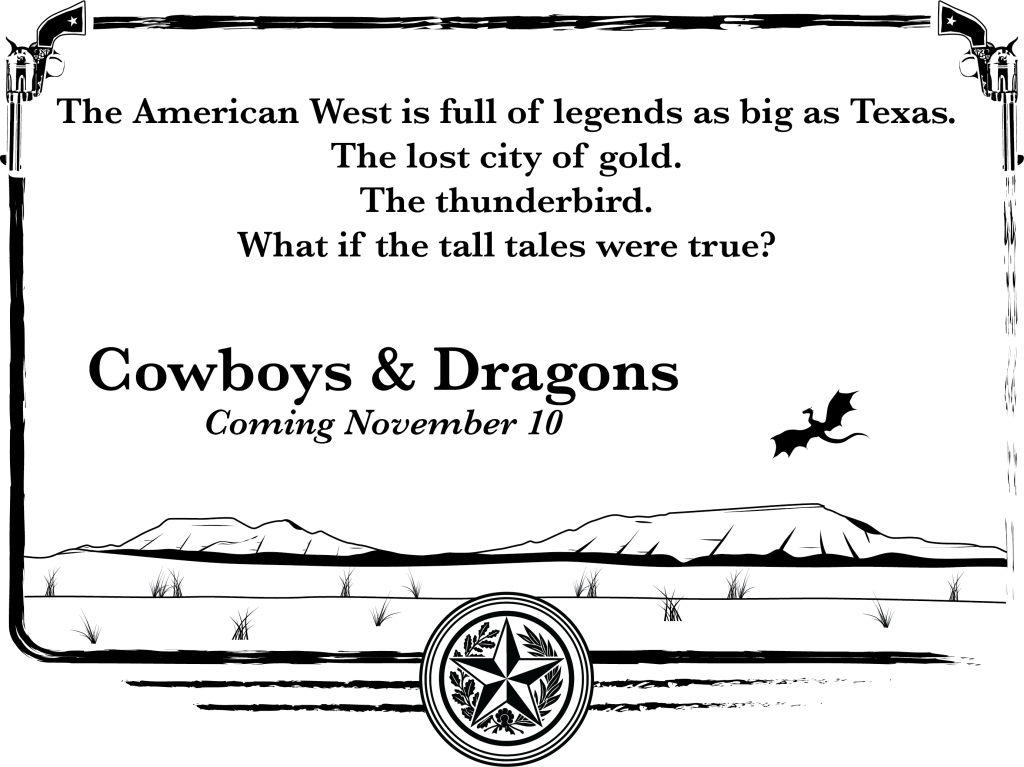
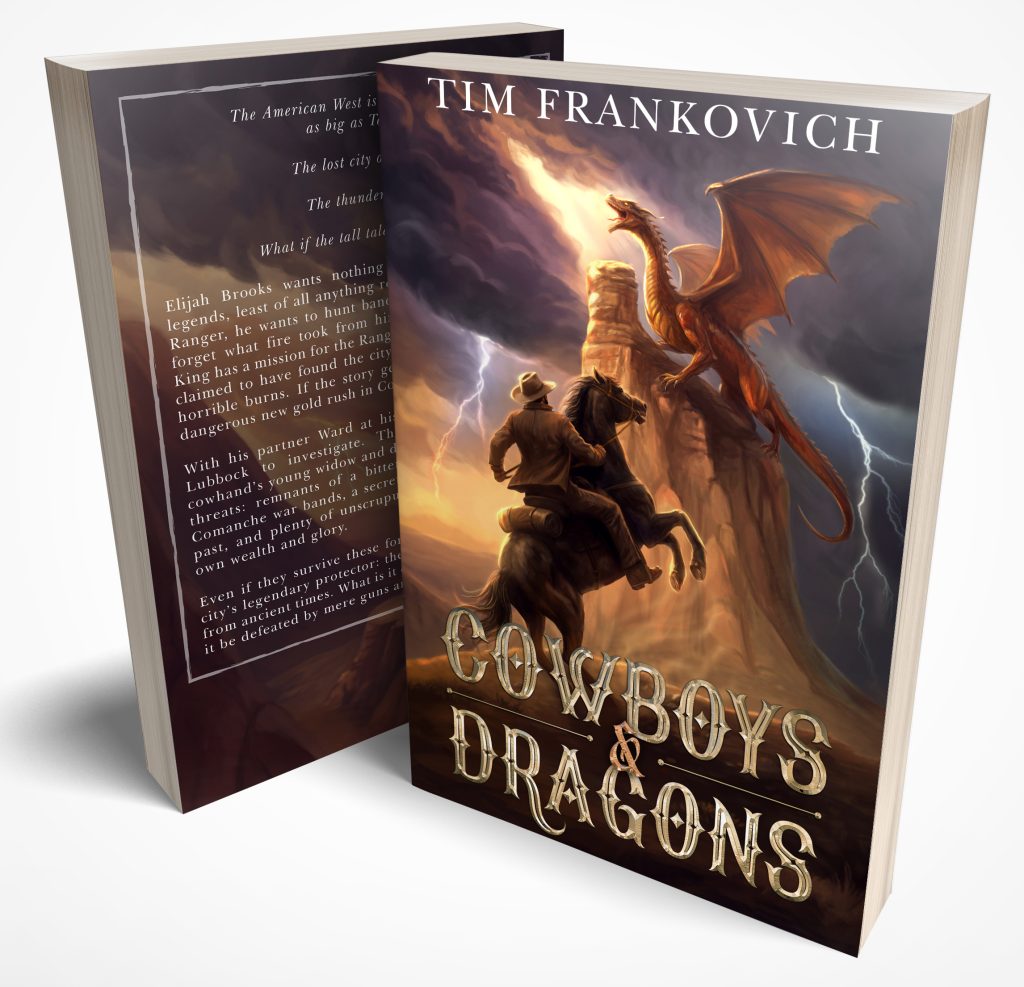
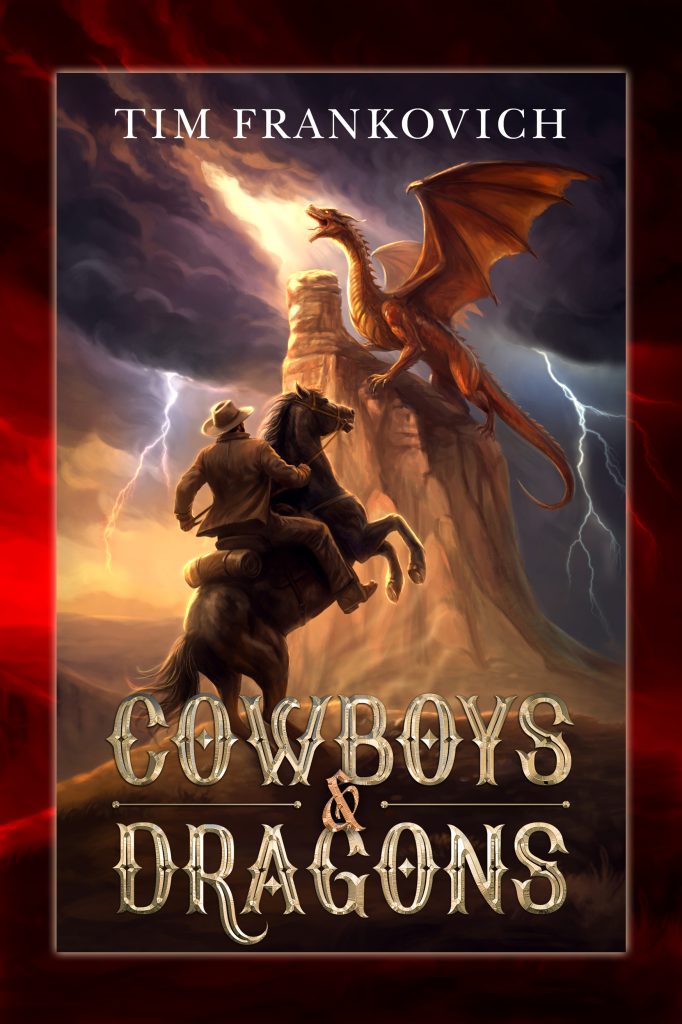
I am beyond thrilled to (at last) provide you all with the complete and awesome cover to my upcoming novel, Cowboys & Dragons.
Miblart did an incredible job! Release date is November 10. Stay tuned for more details!
I’m extremely grateful for all of you who have been a part of my author journey so far. You’ve shown an interest in my books, and that means everything to me. Today, I’m announcing the Next Big Step in my writing career.
I’m officially launching my Patreon page.
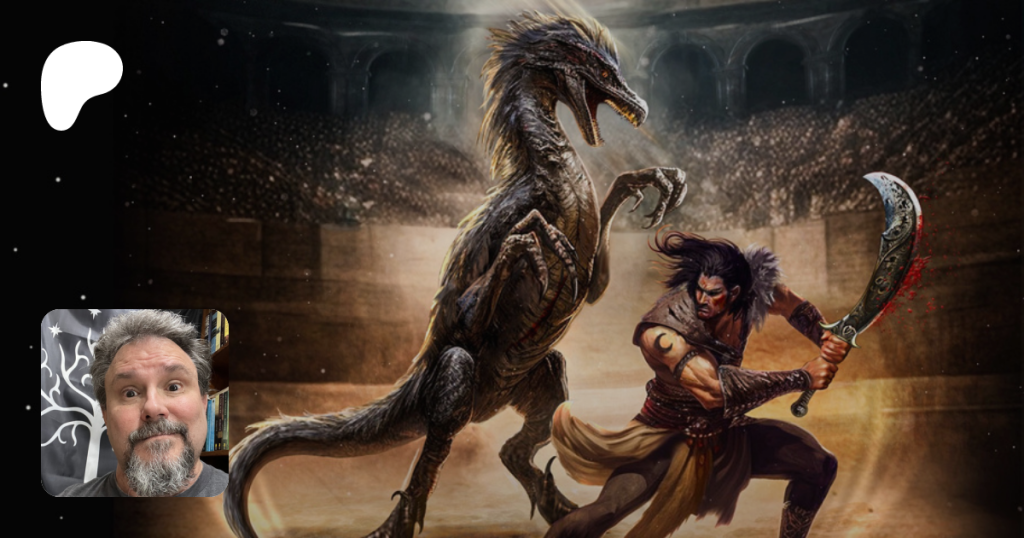
If you’re not familiar with it, Patreon is based on the old concept of patrons of the arts. It updates the concept to modern technology and financing, allowing anyone to become a supporter of my writing. You can choose between two tiers of support, $5 and $10 a month. In return, I’m going to be providing all kinds of special stuff, like this:
For $5 supporters:
For $10 supporters:
If enough people sign up, then writing will become my primary job, rather than my secondary job/hobby. I can devote much more time to writing, and get 2-3 books done every year! This has been my dream for most of my life, and Patreon can be the last step to making it happen.
Check it out and see what you think. Here’s the link: https://patreon.com/TimFrankovichAuthor
Comicpalooza is an absolute blast each and every year. This was my fifth time. While sales were not as great as I would have liked, it was still immense fun, and I had some wonderful author experiences.
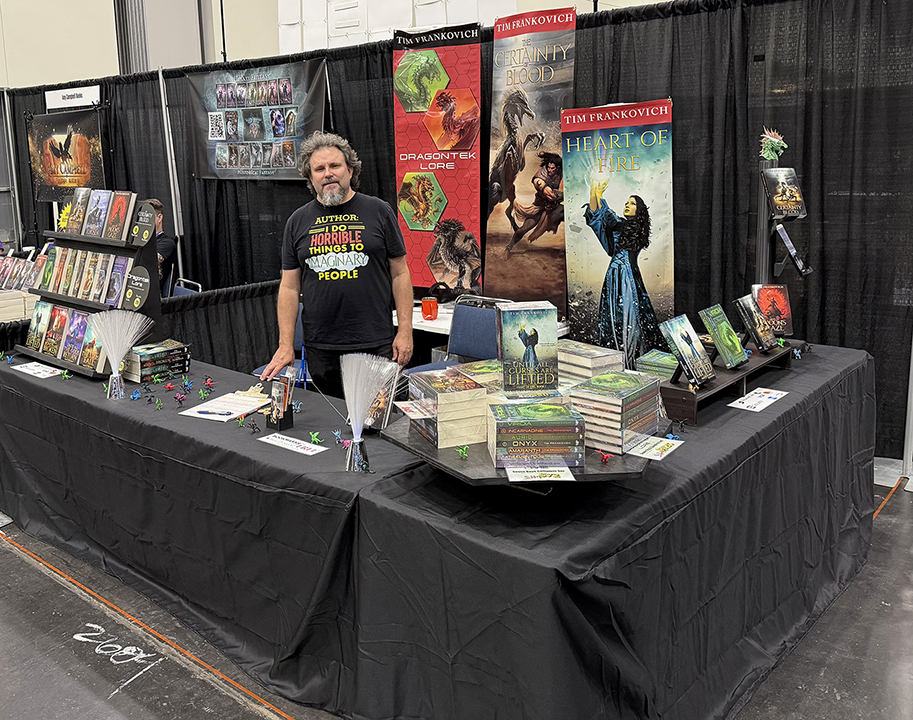
This year, I was privileged to be part of a panel about Self-Publishing, together with author Matt Dinniman of Dungeon Crawler Carl fame. Fun and inspiring!
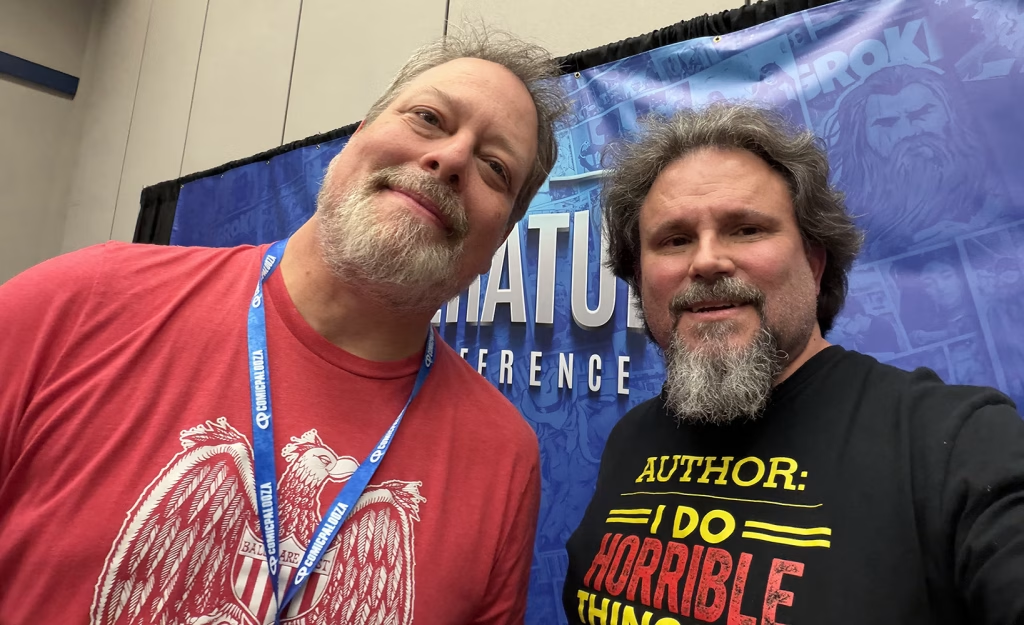
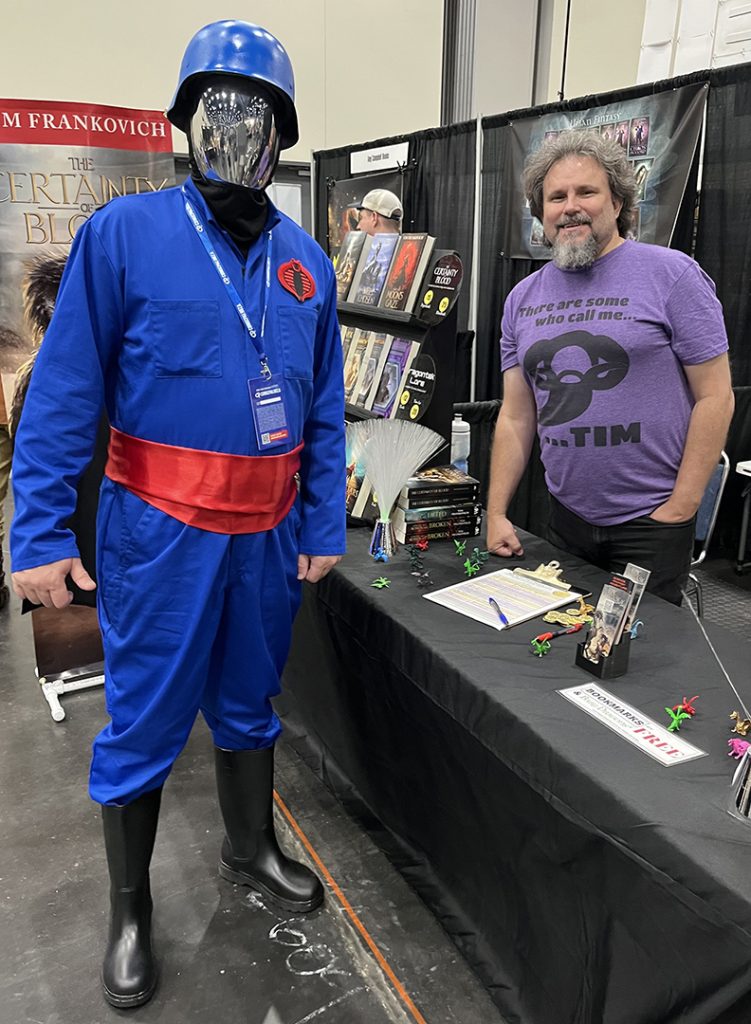
As is always the case, the cosplay is fantastic. You never know who you’re going to run into. As seen below, Cobra Commander approves of my books. You should check them out too.
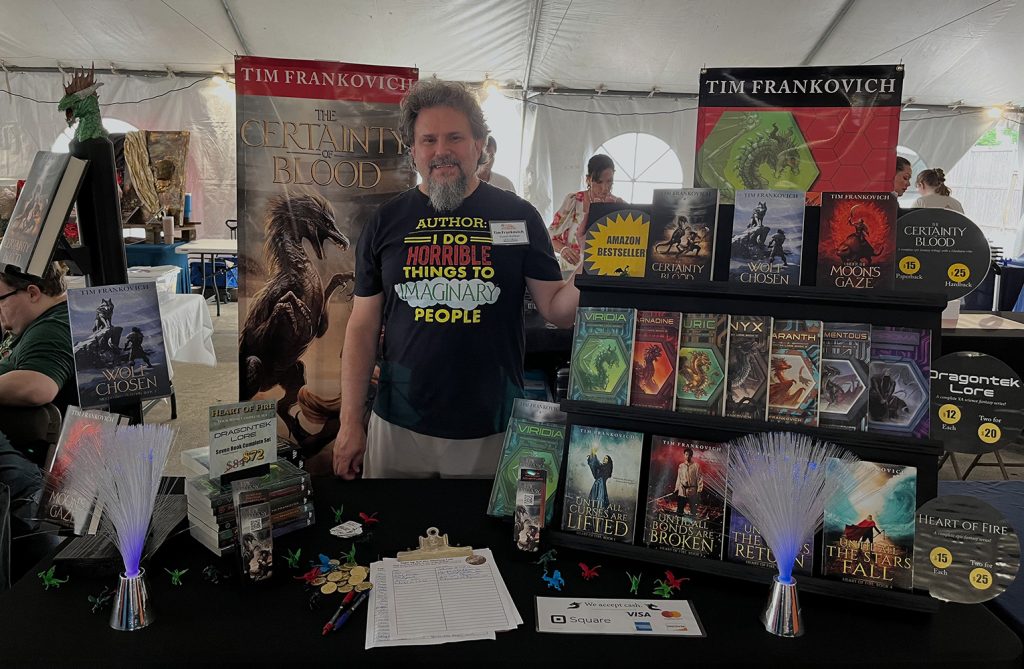
This past weekend, I was at the annual Spring Book Fair at Copperfield’s Books. It’s one of many shows/conventions I’m doing this year (trying to do more!).
The fair was a lot of fun, as usual. (Hanging out with other authors is a blast!) However… it’s Spring. Rain happens. You might remember this happened last year too, but this was on another level. Fortunately, the heavy stuff waited until the very end of the fair on Sunday. Which led to us having to load up like this:
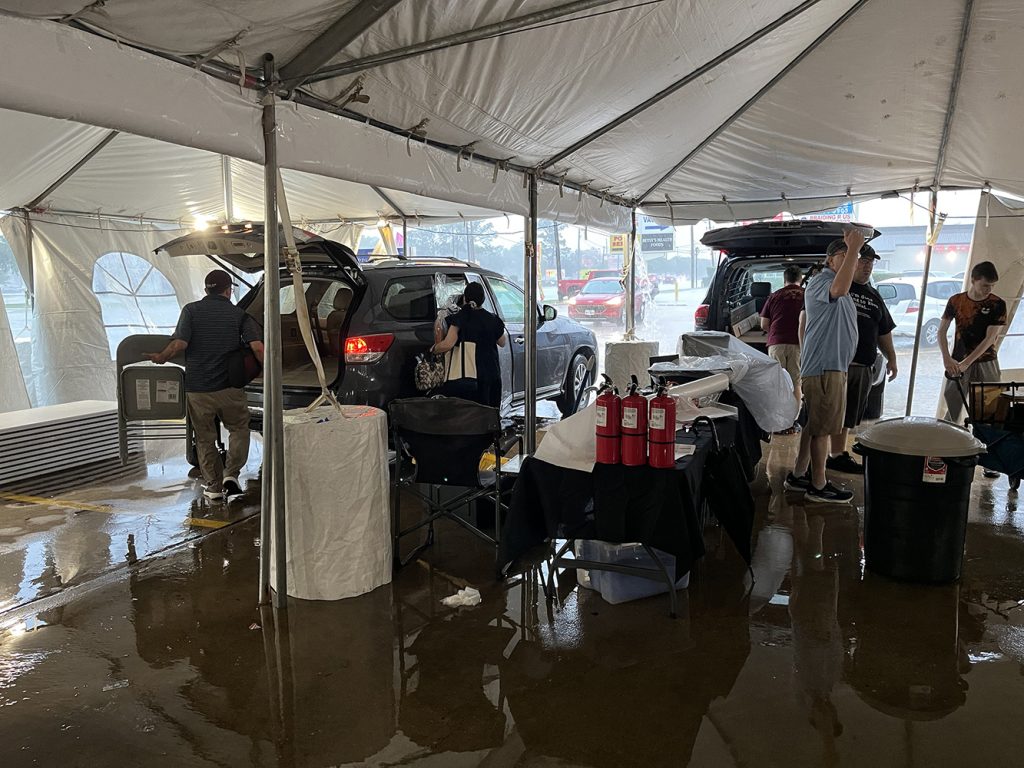
I’ll have a more detailed (and more fun) story in the next newsletter.
This contains MAJOR, HUGE SPOILERS for the ending of the novel, Taliesin, as well as the ending of the second episode of The Pendragon Cycle: Rise of the Merlin. You have been warned.
.
.
.
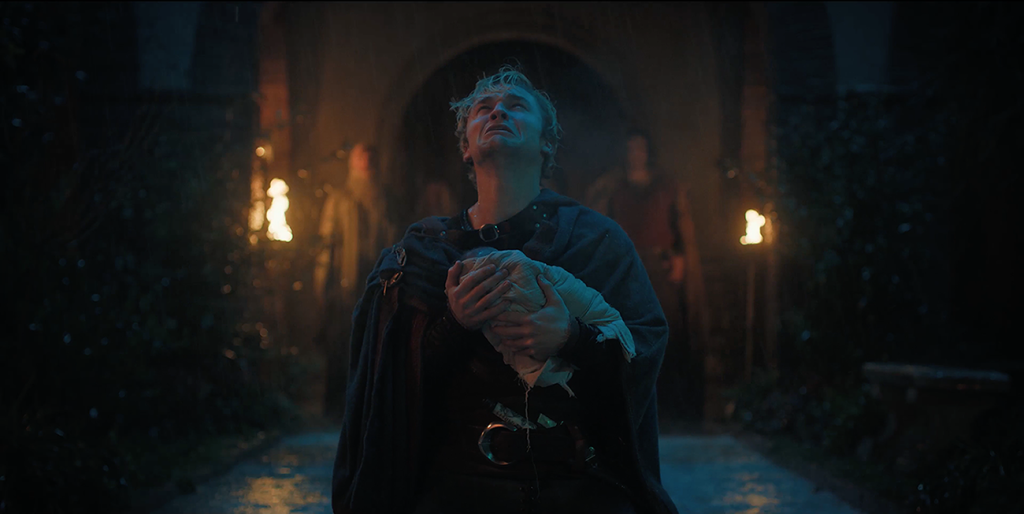
I first read Taliesin by Stephen R. Lawhead in 1988. I was already familiar with Lawhead from his Dragon King trilogy and the Empyrion duology. Both of those were good, but he took it to a new level with Taliesin. The rest of the books in the Pendragon Cycle only sealed him as one of my favorite authors of all time.
But the ending… that devastating ending of the first book. Taliesin dies. Killed by an arrow. In the show, it happens immediately after the birth of his son, Merlin. In the book, it happens weeks later, during their return trip with the baby. Book: it’s a Picti arrow, but it’s made clear that Morgian is behind it. Show: Morgian herself fires the arrow. It’s devastating in both. Taliesin doesn’t even get any final words. My wife has never forgiven Lawhead for the scene.
As a teenager and a young man reading the book, I never quite got it. I understood it was a necessary (maybe) development for the storyline, to shift the focus to Merlin, etc. But something about it nagged at me. I pushed it aside and enjoyed the rest of the books.
Here’s the thing, though: Why? Why does Taliesin die? He’s a prophet, and he predicted many things about his own future. He said he was going to be the King of the Kingdom of Summer! He was going to spread the word of the Good God everywhere, etc. There are so many things supposed to happen. But he died. He didn’t do any of those things. Was he mistaken? Did he fail? Are the gods of Morgian greater than the Great Light of Jesu?
No. And I finally get why. Lawhead explicitly states it in the book, but somehow, I never got it. Maybe it was obvious to everyone else, but it took me growing up and becoming a father myself to understand.
When I saw the scene on my TV screen, those long-before-read words exploded into my head as if I were seeing them right then:
“…singing his own life into the child.”
Lawhead made it clear, even if I didn’t get it. It’s made even more obvious a few pages later when a group of druids tell Taliesin about the sign in the night sky: a new star appeared and was about to fade away when the ring of light around it fades instead and the star blazes bright. The druids interpret this as the birth of an immortal champion, but Taliesin recognizes that a life is given in place of the new one.
Taliesin knew. He knew his own life was forfeit if he saved his child. He gave up his future. He gave up all the prophecies. He gave up the Kingdom of Summer. He gave up life with Charis. He gave up absolutely everything, so that his son would live.
It’s utterly devastating and utterly beautiful.
I started 2025 with multiple problems with my writing career. I’m ending 2025 with the two greatest months ever in my writing career.
Back in January, the cover artist who’d done all six of the previous Dragontek Lore books suddenly ghosted me. At the same time, I was struggling greatly with writing the final book of The Certainty of Blood trilogy. Everything seemed to be falling apart.
Thanks to a wonderful artist friend stepping in to help, I finally got a cover for Chroma. In February, months after I’d planned, the Dragontek Lore series was completed! And… nothing happened. No boost in sales. Nothing.
(To be fair, the Dragontek series has never been a big seller online. It sells very well in live events, but its primary audience is not shopping on Amazon.)
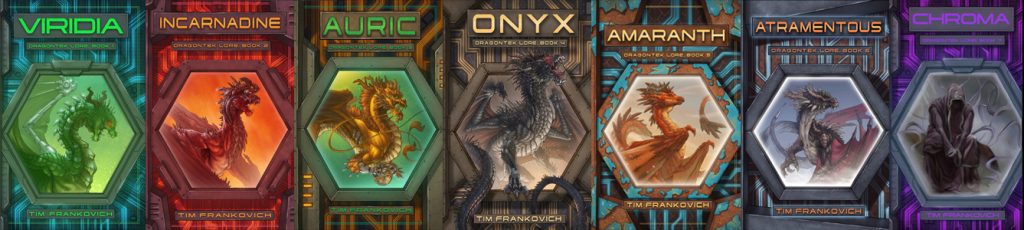
I struggled on with writing the end of my third series, growing more and more concerned as the months passed. Could I possibly wrap up the story of Clanless in a satisfying manner? The Certainty of Blood had become my best-selling book, and Wolf Chosen had the most climactic ending I’ve written. How could I meet expectations? Once I finished editing the initial draft and sent it to my beta readers, I sat on pins and needles to hear their views.
I needn’t have worried. The beta readers provided their best feedback yet, all of it good, and they helped me improve the book substantially.
But once again, I had cover design problems. This was nothing like the previous one, but it delayed the book longer than I wanted, and derailed marketing plans.
Meanwhile, I did a ton of reading and studying in preparation for my next book, featuring cowboys & dragons. I started writing it a couple of months ago, but family health issues kept me from making much progress yet.
Under The Moon’s Gaze launched at the end of October. With some help from advertising, sales took off in November for the entire trilogy. Readers get interested when they see a series is complete. November turned into the best month of online sales I’d ever had. At the same time, I had a couple of live events that also did very well. Things were looking up!
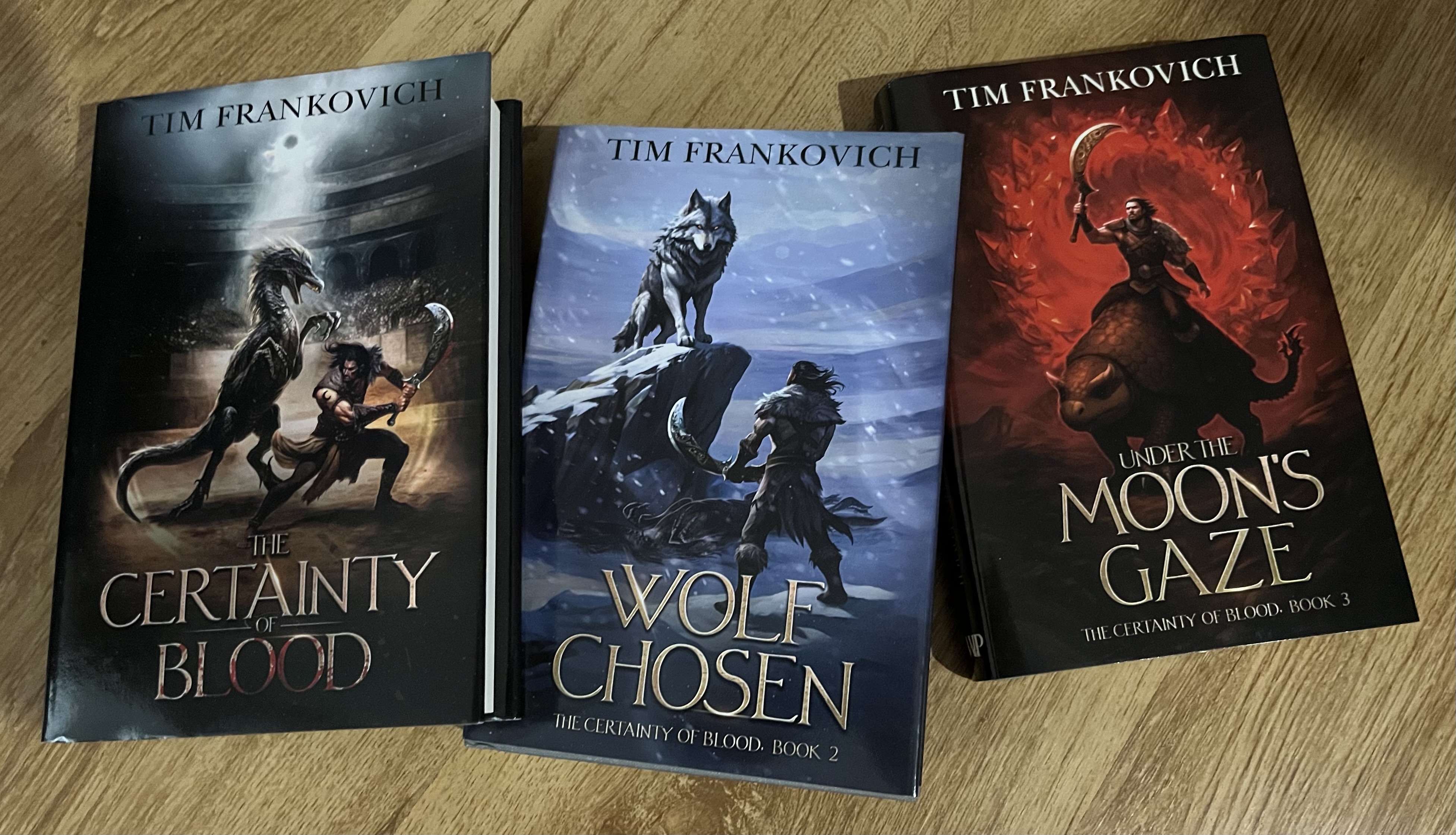
And then came the big news. After four years of attempts, I finally got selected for a BookBub Featured Deal, scheduled for December 22. The results of this campaign, with a 5-day sale on The Certainty of Blood, were incredible. December not only beat November’s new record in sales, it doubled it! With these two months, 2025 turned out to be the highest sales year ever (even though 10 months of the year didn’t do much).
The Certainty of Blood can now officially be called an Amazon Best Seller, even if it was only for a couple of days.
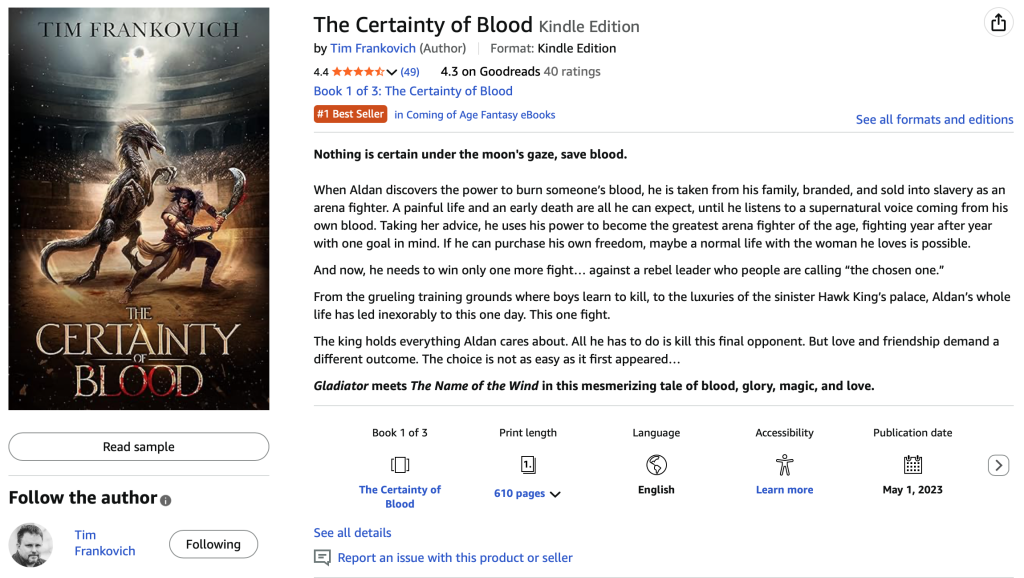
I’ve been blown away and am so thankful. My only concern now is in keeping the momentum going. To that end, I realize that I need to double my efforts in actually getting the next book written.
In my goals at the beginning of the year, I wanted to finish this current book by October. Obviously, that didn’t happen. My goal now is to finish the first draft by the end of February. With how things have been going, that’s an ambitious goal. But if I can do it, then this fantasy set in 1874 Texas can be in your hands by summer.
After that… I’m still not decided on the next project. But I’m leaning toward another book following up on some hints dropped in Under The Moon’s Gaze. Either that, or… something completely different. We’ll see how things play out.
Thanks for being with me throughout all this. Without readers, none of this would be happening. You are all the best! Give yourself a hand!
In case you haven’t heard, The Certainty of Blood is only $.99 this week only!
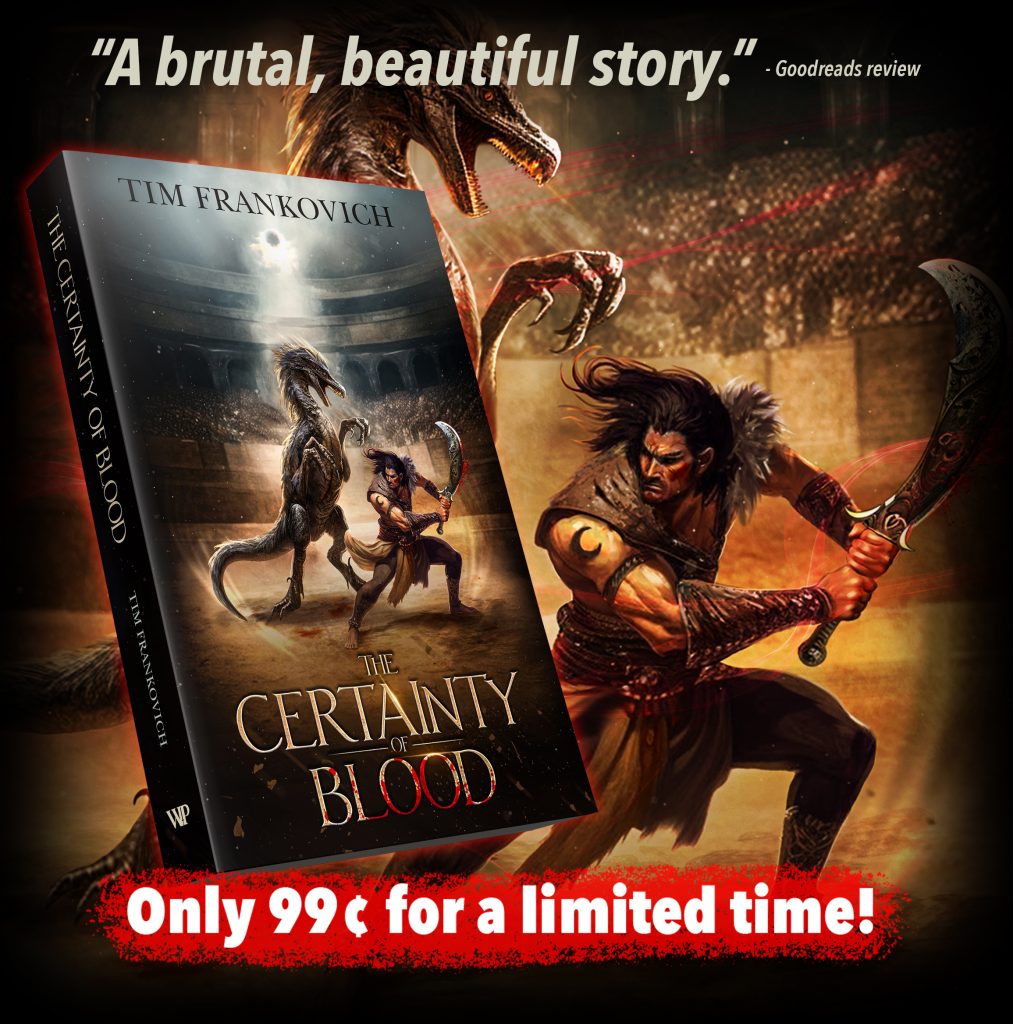
This is done in conjunction with a BookBub Featured Deal, which is huge for we independent authors. Yesterday, when the deal hit, I broke every sales record I have. Hundreds of new readers picked up The Certainty of Blood, and a few dozen went ahead and got Wolf Chosen and Under The Moon’s Gaze, too!
If you haven’t read them yet, now is the perfect time! You wouldn’t want to be left out, would you?
Merry Christmas, everyone!
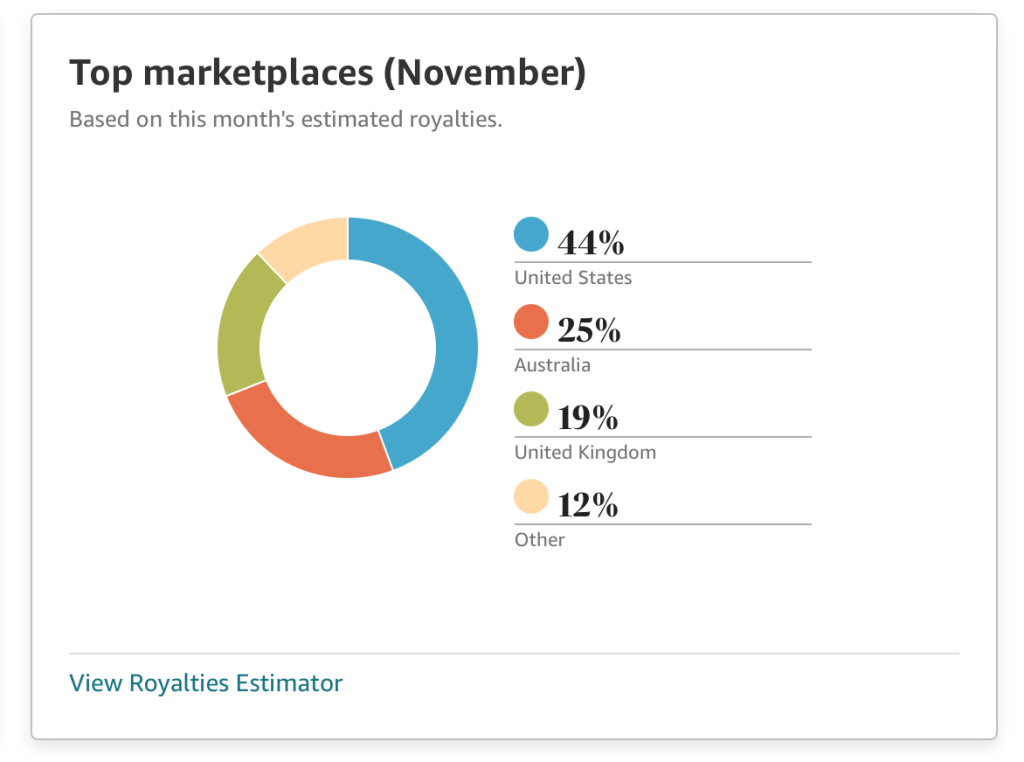
November 2025 was the best-selling month on Amazon since I first published Until All Curses Are Lifted in 2019. Thanks to the launch of Under The Moon’s Gaze, a lot of people read my books this past month. I appreciate all of you!
It’s especially fun to see so many readers from outside the United States! Thanks, everyone!
Powered by WordPress & Theme by Anders Norén